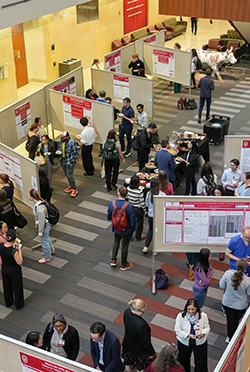
 From May 11 to 14, the Department of Pediatrics hosted Pediatric Research Week. This annual event provides a venue for department researchers to present their latest work to an enthusiastic audience, offers engaging panel discussions about current topics and advances in pediatric medicine, and confers several prestigious department awards to this year’s winners. Participants attended livestreamed lectures, in-person events, and interactive sessions. Thirteen events over four days attracted hundreds of attendees, including a large in-person crowd at the Poster Session and Reception held in the Atrium of the Health Sciences Learning Center Thursday afternoon.
Early Monday, May 11, Research Week opened with a presentation by James (Jim) Gern, MD, professor in the Division of Allergy, Immunology, and Rheumatology, and vice chair of research for the Department of Pediatrics.
The day’s second session featured a panel addressing the topic, “Advancing Research Through Collaboration: Partnerships Within and Beyond,” with four leaders working across departments, institutions, and programs to share how they advance research together. The moderator was Kayla Lemmon, clinical research director of pediatric clinical research coordination (PCRC).

The day and week continued with topics that varied widely, from how researchers can use Epic’s Cosmos dataset, to a presentation about the superlative range of resources from the Institute for Clinical and Translational Research, to a discussion addressing practical strategies for research trainees. The Fellow Capstone Research Presentations — eight fellows presenting their capstone research projects — filled the afternoon of May 13. The Fellow Excellence in Research Award was presented to Allison Weisnicht, MD, PGY-6 fellow.
The Odell Lecture and Award Presentations: George B. Odell Research Award, Ellen R. Wald Research Award, and awardee lectures
The final day of Research Week is the venue for the Odell Lecture, the presentation of the winners of the George B. Odell Research Award and the Ellen R. Wald Research Award, plus the two awardees’ presentations.
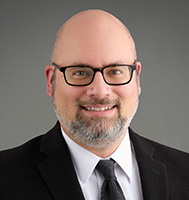
On Thursday, May 14, Christian Capitini, MD, professor in the Division of Hematology, Oncology, Transplant, and Cellular Therapy, and director of the Carbone Cancer Center, presented the 2026 Odell Lecture. The lectureship was established in 1994 to honor Dr. Gerard B. Odell, emeritus professor of pediatrics and an internationally recognized researcher in the field of neonatal jaundice and bilirubin metabolism. Capitini presented his lecture, “Genetically Modified Immune Effector Cells as Personalized Medicine for Childhood Cancer.” He reviewed the success of incorporating immunotherapy into standard care treatment regimens for the treatment of childhood cancers like neuroblastoma, and how to transform immune cells in ways that can lead to more personalized approaches to treating children’s tumors.
2026 Odell Research Award
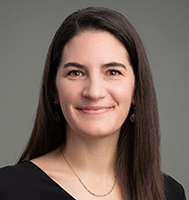
The Gerard B. Odell Research Award was established to honor Dr. Odell’s distinguished career in pediatric research, academia, clinic practice, and education. The award is given to an assistant or associate professor in the Department of Pediatrics in recognition of their outstanding research accomplishments and demonstrated potential for future contributions in basic or translational research. Recipients will receive $5,000 to spend on research or professional development expenses and a one-time award of $5,000 via the annual compensation plan exercise.
The winner of the 2026 Odell Research Award is Rebecca (Becky) Richards, MD, PhD, assistant professor in the Division of Hematology, Oncology, Transplant, and Cellular Therapy.
Richards joined the Department of Pediatrics in 2022 and has quickly established herself as one of the most productive and innovative translational researchers in the department. The overarching focus of her research group is bold, with a clear trajectory for future application.
Using bioengineering and gene-editing approaches, her research aims to endow CAR T cells with synthetic receptor “circuits” that increase their ability to kill cancer cells without harming healthy cells in order to address pediatric acute myeloid leukemia (AML), one of the most difficult childhood cancers to treat. Her work is robustly supported through an NIH K08 Career Development Award (NCI, 2022–2027). She has built on that grant foundation with additional funding from many sources. In addition, Richards holds three patents, with a fourth pending through WARF, which underscore the translational significance of her work.
Her publication record is already exceptional, with 19 peer-reviewed articles in important journals. She also led a working group that produced a landmark multi-institutional Blood Advances consensus report on AML CAR T cell trial design. It was a recognition of her national standing in this field.
Beyond this research work, Richards also leads the Pediatric Stem Cell Transplant and Cellular Therapy team, where she serves as a conscientious and collaborative colleague while actively mentoring the next generation of physician-scientists.
Richards’ entire range of accomplishments is exemplary of the demonstrated future potential that the Odell Award was designed to recognize.
Richards’ lecture was entitled, “Accelerating CAR T Cells in AML: The Power of Collaboration.”
2026 Ellen R. Wald Research Award
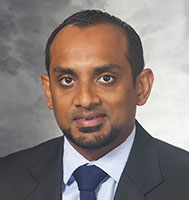
The Ellen R. Wald Research Award was established to honor Dr. Ellen Wald’s distinguished career in pediatric research, academia, clinical practice, and education. The award is given to an assistant or associate professor in the Department of Pediatrics in recognition of their outstanding research accomplishments and demonstrated potential for future contributions in clinical and health services research or quality improvement. Recipients will receive $5,000 to spend on research or professional development expenses and a one-time award of $5,000 via the annual compensation plan exercise.
The 2026 Ellen R. Wald Research Award winner is Dinushan Kaluarachchi, MBBS, associate professor and director of neonatal clinical research in the Division of Neonatology and Newborn Nursery.
Kaluarachchi joined the Department of Pediatrics in 2016 and has established himself steadily as a physician-scientist and research leader in the division. His research group is dedicated to improving respiratory health and outcomes of preterm infants, focusing on the prevention of bronchopulmonary dysplasia (BPD), a persistent challenge in neonatology. His strategy has been to target the early drivers of BPD: respiratory distress syndrome (RDS), patent ductus arteriosus (PDA), and lung inflammation. In moderate preterm infants, his work has identified early predictors of respiratory failure, such as respiratory severity score and oxygen saturation index. His published studies have provided clinicians with practical tools for monitoring and defining levels of early risk.
Kaluarachchi is also a national leader in less invasive surfactant strategies, including his work as a site leader for a multicenter aerosolized surfactant trial and as co-study chair within the network. Under his leadership in this, the Department of Pediatrics has become a key clinical trial site in AERO-03 and AERO-05 clinical trials evaluating early aerosolized surfactant therapy. His work includes PDA management through collaboration with the NICHD Neonatal Research Network; he also serves as the site principal investigator for the NIH-funded PIVOTAL trial, positioning the UW as a key contributor to defining PDA management.
Demonstrating both productivity and application potential, Kaluarachchi has published over 30 peer-reviewed articles, obtained foundation and industry-supported funding, gained FDA Investigational New Drug approval for new drug therapy (late surfactant combined with budesonide), and will launch the “Little Lungs” randomized trial focused on the prevention of BPD.
Overall, Kaluarachchi has strengthened the department’s research infrastructure, and within the division, he has helped sustain a culture of prospective investigation, expanded participation in national collaborative studies, and has actively mentored fellows and residents in research. His work integrating clinical practice, quality improvement, rigorous study design, and applicable results fully exemplifies the salient features of Dr. Ellen Wald’s strong legacy as a physician-scientist.
His lecture was entitled, “Foreign Medical Graduate to Building a Successful Neonatal Clinical Research Program.” Watch these sessions online.
After the Odell Lecture and presentation of awards, the morning of May 14 continued with the Ellen R. Wald Faculty Research Forum, featuring four speakers who described their innovative work in genomic testing, ventilation during pediatric CPR, treatment to prevent familial hypertrophic cardiomyopathy, and limiting pulmonary disease in preterm infants. A session highlighting three administrative programs that provide “Research Resources” followed: these programs create the infrastructure and support that allow department researchers to thrive. Watch these sessions online.
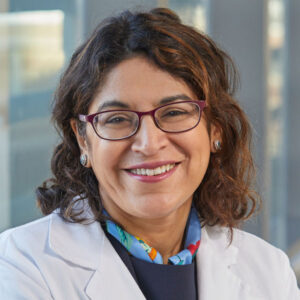
The afternoon of May 14 began with the Research Week Keynote speech, “Finding Purpose in Service and Discovery,” presented by Dean Nita Ahuja, MD, MBA, dean of the UW School of Medicine and Public Health. She spoke about her journey as a physician-scientist, passionate about improving cancer care through leading national clinical trials and making discoveries in epigenetics in the laboratory. Platform presentations followed, with six presentations featuring faculty and trainees selected by the Research Week Committee. The day closed with the Research Week Poster Session, presenting more than 50 posters that showcased the wide range of consequential research being conducted across the Department of Pediatrics. Watch these sessions online.
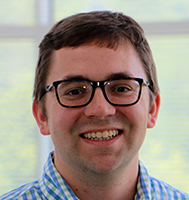
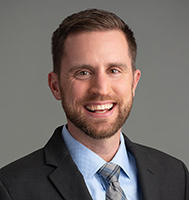
The co-chairs of the 2026 Research Week planning committee were Matt Harer, MD, associate professor, and Douglas Dean III, PhD, associate professor, both in the Division of Neonatology and Newborn Nursery.
All presentations are available to view online via YouTube through the Research Week webpage. Simply click on the talks of each day’s listings and scroll to the YouTube offering.
The Research Week Guide is an 18-page comprehensive PDF overview of all scheduled events, including topics and authors of all the poster presentations.