The fellowship program at UW offers a rich scholarly experience and fellows have ample opportunities to get involved in research opportunities with members of the cardiology division as well as collaborators throughout the department of pediatrics, UW Health and the professional schools of UW Madison. Fellows with have approximately 12 months of protected time to perform research during their training. Through strong collaborative relationships with the Institute for Clinical and Translational Research and the Cardiovascular Research Center at UW, a cardiology fellow has multiple avenues to make research a cornerstone of their academic career. The division of pediatric cardiology has a research coordinator, Xiao Zhang, PhD, who works closely with fellows and faculty to advance research projects, provide assistance with grant writing and submission as well as research design.
Some highlights of research in the cardiology division are examples of projects that a prospective fellow could be involved in:
Amy Peterson, MD
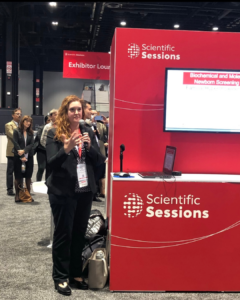 Dr. Peterson is a board-certified pediatric cardiologist and is a certified clinical lipidologist. She is the founder and director of UW’s Pediatric Preventive Cardiology program, which focuses on cardiovascular risk reduction and treatment of cholesterol disorders in children. She serves on the Scientific Advisory Board for the Family Heart Foundation, the American Academy of Pediatrics Committee on Nutrition, and is the Chair-Elect of the Young Hearts Cardiovascular Disease Prevention Committee of the American Heart Association.
Dr. Peterson’s research interests focus on pediatric cholesterol screening as well as diagnosis and treatment of Familial Hypercholesterolemia in children. She is the principal investigator for the ORIGIN-FH (Opportunity to Reach Individuals with Genetic dyslipidemia in Infancy and Newborn period to Familial Hypercholesterolemia). Her research team maintains a database of patients who have received care in the prevention program that has been used for many investigations on the diagnosis and management of pediatric lipid disorders.
J. Carter Ralphe, MD
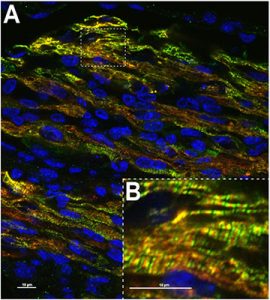
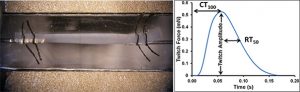 The Ralphe Reasearch Group is interested in understanding how mutations in genes encoding important regulatory proteins within cardiac cells lead to the development of hypertrophic cardiomyopathy (HCM). Studies focus primarily on mutations in cardiac myosin binding protein C (cMyBP-C), a protein that regulates contractility and functional reserve of the heart. Mutations in cMyBP-C are recognized as a leading cause of familial HCM. Their current approaches employ a novel 3D engineered cardiac tissue model using late fetal or early neonatal mouse cardiomyocytes from which they gather molecular, metabolic, and contractile data. Using human-derived induced pluripotent stem cells they can study cardiomyocytes from individuals carrying specific HCM-associated mutations. The lab, located in the state-of-the-art Wisconsin Institute for Medical Research, is equipped with standard and high-throughput molecular tools as well as two physiology workstations that measure muscle contractility -twitch force amplitude and kinetics of contraction and relaxation.
Nicholas Von Bergen, MD
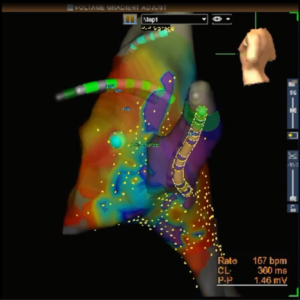 Dr. Von Bergen’s interests focus on techniques to improve the current standard of practice in electrophysiology through research and innovation. He is active in the development of new technology in collaboration with bioengineering specialists at UW, and now has multiple patents. One of these innovations is the AtriAmp, a device which has become standard of care at many pediatric centers in the US. The combination of innovation and academics has allowed Dr. Von Bergen’s research to translate directly to areas of substantial clinical need. His largest current project is utilizing machine learning to evaluate post-operative rhythms through real-time analysis of the atrial electrogram.”
Scholarly Oversight
Each fellow will assemble a Scholarly Oversight Committee (SOC), composed of at least 3 faculty members, one of whom is outside of the subspecialty discipline. The SOC meets initially during the first year of fellowship, then twice a year afterward to evaluate the fellow’s scholarly progress and to help provide support and direction. At the end of training, the SOC is responsible for determining whether the fellow’s research and work product have met the American Board of Pediatrics requirement for sub-specialty board eligibility.
Recent Division Publications: https://www.pediatrics.wisc.edu/divisions/cardiology/research/