UW–Madison’s long history with integrative health practices began nearly 25 years ago when David Rakel, MD, professor and chair in the Department of Family Medicine and Community Health, founded the Integrative Medicine Program. Initially it offered a handful of complementary therapies, but quickly grew. It has expanded over the last two decades to become one of the largest and most successful integrative health programs in the country.
In 2022, a gift from the Bernard Osher Foundation allowed the program to become one of the country’s 11 integrative health institutions comprising the Osher Collaborative for Integrative Health. It was soon after designated as an official multidisciplinary center within the University of Wisconsin. In December 2022, the Osher Center for Integrative Health at the University of Wisconsin was established.
The center offers a large number of therapies and services for adult patients, including massage, mind-body therapies, yoga, meditation, nutrition, exercise, and many others. The expansion of integrative health therapies to address the needs of pediatric patients has followed. Two clinicians in the Department of Pediatrics have been applying their extensive experience and knowledge to the center, bringing complementary therapies to children, from newborns to age 21, into their practices.

Mala Mathur, MD, MPH, associate professor in the Division of General Pediatrics and Adolescent Medicine, also serves as director of professional development within the department. She joined the Department of Pediatrics faculty in 2016, bringing more than 15 years of experience as a pediatrician. Her clinical experience was enhanced by her deep interest and experience in integrative medicine, including years of practicing mindfulness and yoga (she is trained in clinical hypnosis and is a certified yoga instructor).
She has often included complementary therapies in her primary care practice. “I bring an integrative approach,” Mala explained. “Which just means that I have more tools in the toolbox that I feel comfortable offering to families.” The UW–Madison Osher Center for Integrative Health has now allowed her a larger venue to develop programs with more kinds of integrative therapies for pediatric patients with a range of conditions.
“I feel honored to be able to work more in-depth with patients offering mind-body practices through the Pediatric Mind-Body Clinic,” she reported. “It opened in July in the Integrative Health Clinic space at Science Drive Medical Center and is geared toward patients age 5 to 21. Our surveys tell us that families very much want these therapies for their children.”
She noted that combining biomedical and integrative therapies can improve the quality of life for patients with conditions such as anxiety, irritable bowel syndrome, or headaches. Having the time and space to practice breath work, mindfulness, yoga, or clinical hypnosis allows for integrative therapies to be experienced effectively and as a norm combined with biomedical therapies.
Throughout 2025, Mathur arranged group medical visits for 8- to 11-year-olds.
“We see so many kids who have anxiety and difficulties with emotional regulation,” Mathur explained. “It makes sense to address the worries of kids in the 8 to 11 age group rather than waiting until they are teens. The group situation helps them realize that others are like them and they are not alone in how they are feeling.”
The group medical visits met during the year to address children’s anxiety issues. Each session met one day per week for four weeks after the school day. The groups have been co-led by Mathur and one of several other instructors (who address mindfulness, nutrition, and exercise, for example). Children learn approaches to lessening anxiety, to understanding healthy eating and sleeping, and to reducing stress through physical activity. Plans for a group to meet in the new year are in the works now.
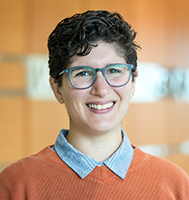
Sammi Tyler, DO, assistant professor in the Division of Neonatology and Newborn Nursery, also sees a wide age range of patients — from birth to about age 18. However, she focuses most of her clinical work on newborns, both in the newborn nursery at UnityPoint Health–Meriter and in the Integrative Health Clinic. Tyler employs osteopathic manipulative medicine (OMM), techniques that combine her deep knowledge of anatomy and technical skills of her own two hands to support infants from the very beginning of their lives. Her passions include breast feeding support, early development, and integrative approaches to common concerns for newborns and older children. In July 2025, Tyler helped launch a new OMM consult service in the postpartum unit at UnityPoint Health – Meriter with the collaboration of other clinicians from the Department of Family Medicine and Community Health.
Tyler explained that a foundational tenet of osteopathic medicine is that function relates to structure. “If a patient’s body is not able to function well,” she said, “I can seek out, through gentle touch, how some aspect of the body’s present structure is hindering its function. An example is a newborn who feeds only on one side. Something must be affecting their feeding biomechanics on the other side.” Her skilled hands can determine cause and remedy.
Tyler also works through the Integrative Health Clinic with older patients such as dedicated athletes who suffer from repetition and stress injuries that hinder their function. Often, she can feel the problem in a patient’s body in a way that cannot be revealed through imaging. “I have had patients so relieved when I tell them that, yes, I can feel what they are feeling in their body, even when imaging has not revealed the problem,” she reported. “To feel seen and heard and validated means the world to them.”
As Mathur also noted, Tyler’s patients want these health care options. She explained that, in her experience, there are three overarching desires that families have for their children. “They want to be as preventive as possible, as proactive as possible, and they want them to be exposed to as little risk as possible,” she said. “And with osteopathic manipulative medicine, there is so little risk involved. They don’t have to worry about some unexpected reaction or ingredient.”
Tyler also expressed her profound thanks to the department. “I feel a lot of gratitude for the acknowledgement that these services — what Mala and I are both trying to do — have a place within pediatrics and that we have such strong support.”
She also noted that the integrative health services are not just for the patients. “Our services benefit the patients, of course, but they also benefit the residents who train with us,” she explained. “So what we do ties into the department’s focus on training the next generation. It has been a joy to include learners in these educational experiences.”
Information for providers and families
For providers who wish to refer patients to the Integrative Health Clinic and Group Medical Visits, order “consult to integrative health and wellness” using options in the drop-down menu such as “OMT.”
Patients can self-refer to a Group Medical Visit (GMV) but not to other integrative medicine services. Providers who would like to refer patients to the inpatient newborn or postpartum OMM service can order “consult osteopathic manipulative medicine.”
For Group Medical Visits: Clinicians can share information about the latest Pediatric Group Medical Visit by adding the dot phrase .GMVrecommended in the after visit summary and place an order for Integrative Health, clicking on Group Medical Visit.
Parents can also self-refer through information on the UW Health Group Medical Visit webpage.