The Department of Pediatrics Medical Education Week, which occurred February 9 through 12, featured many engaging presentations about new learning topics and teaching strategies, as well as innovative methods of critique. One eye-opening offering on February 10, however, addressed a completely different topic: the international medical graduate (IMG) subset of trainees within the department. IMGs are doctors who are practicing medicine in a country different from their country of primary medical qualification, including residents and fellows.
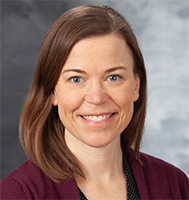
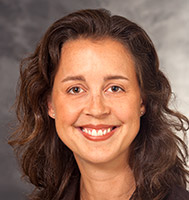
Members of the International Medical Graduates Committee, Nicole (Nikki) St Clair, MD, MS, professor in the Divisions of Hospital Medicine and Complex Care and Global Pediatrics, joined by Heidi Kloster, MD, associate professor in the Division of Hospital Medicine and Complex Care and associate residency program director, created a venue highlighting a panel of the department’s IMG trainees. St Clair and the panel examined the department’s history with international medical graduate trainees and how the new residents and fellows from other countries managed the challenges of a complex process. One current faculty member joined four current IMG residents and one fellow to offer foundational data and stories of their own experiences.
IMGs are a large part of the health care system in the U.S. Across the country, there are acute physician shortages due to aging and retirements and insufficient numbers of new medical school graduates, as well as an increasing population. This shortage is forecast to become even more acute; more and more people will be without a primary care physician. Workforce models from 2023 created by the Association of American Medical Colleges (AAMC) predict a shortage of physicians by 2036 between 13,500 and 86,000.
In 2022, approximately 803,562 licensed physicians (77%) within the country were U.S. or Canadian medical graduates. The remaining 238,642 (23%) were international medical graduates, coming from more than 120 countries. IMGs are essential in the U.S., now and in the future.
While the Department of Pediatrics has historically intermittently matched international medical graduates for fellowship training positions, the residency program began implementing plans for increased recruitment of IMGs in 2020. At that time, as all will recall, COVID-19 struck and upended all aspects of work and home life. Challenges specific to resident IMGs’ onboarding and experience were not initially noticed within the general difficulty and uncertainty.
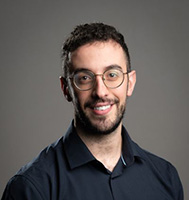
2021 brought resident Jack Koueik, MD, now PGY-5 fellow in the Division of Allergy, Immunology, and Rheumatology, from Lebanon and two other IMGs from Nepal and South Africa. All arrived and started late due to paperwork and administrative complexities, in part related to COVID-19. They bonded as friends and discussed their experiences.
Koueik met Nikki St Clair at his delayed start to patient rotations and kept meeting with her throughout the year. “I would tell her, oh, this was new for us, or this was something I struggled with,” Koueik recounted. He met regularly with the other two IMGs as well, keeping a record of challenges and perplexities they shared.
For Koueik’s first four-week Community Pediatrics, Advocacy, and Ambulatory eXperience (CPAAX) training, he chose IMG training and pediatrics as the focus of his advocacy project.
“That’s when the issue and the project became ‘official’ and felt as though it was ‘on the books’ as something that required attention,” Koueik explained. “Then Dr. Sklansky [Daniel Sklansky, MD, associate professor in the Division of Hospital Medicine and Complex Care ], the residency program director, and the associate program director [Kloster], and chief residents became involved, and we created the IMG Committee.”
For his CPAAX project addressing IMGs, Koueik conducted a literature review, gathered IMGs’ responses about their acclimation experiences, occasionally convened dinners, and led a focus group to inform what would become some committee initiatives. His work informed the creation of the committee.
St Clair described it as well. “We realized after the fact that we had failed to recognize that IMGs had unique needs,” she recalled. “We knew we would have more IMGs coming, and we needed an infrastructure to support them. We formed the IMG committee for that purpose.”
The committee was comprised of educators, leadership, and representatives — a diverse, knowledgeable group. Its goal was to learn the nature of IMG challenges and determine what could be done to mitigate them. Koueik was the resident representative and led much of the forward movement and advising of the group, according to St Clair.
“He was also very much an informal leader,” she recounted, “ensuring that there was and is an ongoing community for our IMGs.”
The committee reviewed the data and developed curricula. Implementation and ongoing feedback served to adapt the new curriculum to be effective. Further, efforts to develop comprehensive information to help IMGs find community and avenues of communication were especially beneficial.
In the Medical Education Week presentation, the panel of five IMG trainees described the challenges that IMGs face through their own personal stories. Beyond the many possible required exams, required documented experience, and recommendations that bring them to the edge of residency possibility, the selected IMGs must then request J-1 work visas (appointments for which may take months), and obtain appropriate medical licenses. Challenges inevitably arise due to the relatively short period of time between the March match and the beginning of orientation for residents in June. Residency itself starts in July.
Upon arrival in the U.S., IMG trainees must obtain a Social Security number, find housing, apply for a driver’s license, and other often time-consuming tasks in a totally foreign environment. When residency begins, spare time becomes rare.
St Clair, who is also the director of the Global Child Health Training Program, which offers international medical electives, noted that her own research examines how people respond to totally new work-life and home-life environments. This is exemplified in the experience of IMG trainees. She described in the presentation the experiences of culture shock, acclimation, and acculturation that progress over many months. “The more we understand these unique challenges for IMGs, the better we can help accommodate them and meet their unique needs,” St Clair explained. “We would not have anticipated these needs without this sort of committee, the focus groups, and the open dialogue it has fostered here, because I think some people were just too scared to ask.”
The formation of the committee facilitated new knowledge, understanding, and possibilities for improvement, now and in the future.
“We’d like to start actively collaborating with educators across UW training programs who are also working to support their IMGs,” St Clair reported. “Early discussions have occurred with general surgery, anesthesia, and internal medicine, and there is definitely room to synergize and expand our efforts across the UW system.”
St Clair noted further, “The more we know about IMGs’ experiences, the better we can support them as colleagues and as friends. That knowledge engenders a more empathetic understanding of the process, which they all successfully navigate — and it is so impressive that they do! We come to understand and respect the profound resilience of those who have managed to get here from such diverse places, working beside us as physicians.”
At the close of the presentation, St Clair did acknowledge the difficulties the past year has presented for immigrants, as new policies and travel bans have been rapidly enforced. The Department of Pediatrics does not currently have the capacity to offer legal advice. However, St Clair added, “I am proud to say that the UW Law School’s immigrant justice clinic is working on developing an infrastructure to help UW students tackling immigration concerns, and hopefully can be extended to IMG trainees in the future, if and when it is needed.”