
Join us.
The Department of Pediatrics’ annual Medical Education Week will be held February 9-12, 2026. Through a mix of live-streamed lectures, in-person workshops, and interactive sessions, members of the department and the entire University of Wisconsin–Madison community can learn the latest in medical education. Continuing medical education (CME) credit will be available.
Our mission is to emphasize medical education as a cornerstone of the Department of Pediatrics by highlighting innovations and best practices, discussing implementation in our department, and empowering faculty to grow as educators.
Medical Education Week Luncheon
We encourage folks to join for lunch and spend some time together for the Medical Education Week luncheon! Lunch will start at 11:30 a.m. in HSLC 1345 and carry into the Summit.

Medical Education Summit
The Medical Education Week Summit will feature Dr. Adam Bauer presenting "If You’re Torn, Side With Me Because I Want It That Way" followed by Dr. Mike Ryan leading the workshop on feedback. The Summit is from noon to 3 p.m. in HSLC 1345.

Medical Education Week Sessions 2026
Once a session has concluded, the recording and session details will be available under the session dropdown below
This is an accordion element with a series of buttons that open and close related content panels.
Monday, February 9, 8-9 a.m. I The ABCs for Successful Educational Program Outcomes: Amplifying Accountability, Building Bridges, and Championing Collaborative CQI and Innovation
The ABCs for Successful Educational Program Outcomes: Amplifying Accountability, Building Bridges, and Championing Collaborative CQI and Innovation
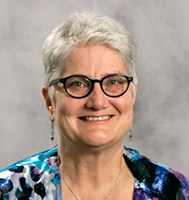
Speaker: Elizabeth Petty, MD – Professor, Division of Genetics and Metabolism, Department of Pediatrics, Senior Associate Dean for Academic Affairs, University of Wisconsin School of Medicine and Public Health
Session Overview: In this session we will discuss approaches for education programs that focus on improving learner outcomes and satisfaction, meeting or exceeding program accreditation standards, and optimizing faculty/staff engagement and morale. Using annotated examples associated with successful accreditation of medical education and health profession programs at the University of Wisconsin School of Medicine (UWSMPH), as well as across the country, we will outline strategies that have been successful. Common pitfalls to avoid will also be illustrated. Finally, we will engage participants in reflection and discussion exercises around addressing some challenging contemporary issues that are currently impacting health education programs locally, regionally, and nationally.
This session was not recorded.
Monday, February 9, 12-1 p.m. I EPAs in action—Not so SIMPL
EPAs in action—Not so SIMPL
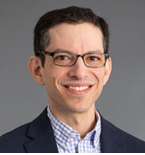 Speaker: Dan Sklansky, MD – Associate Professor, Residency Program Director, Division of Hospital Medicine and Complex Care, Department of Pediatrics, University of Wisconsin School of Medicine and Public Health
Session Overview: This session will provide a brief overview of EPAs before giving examples of how they can be used in front-line assessments of trainees. The speaker will also describe several different options for EPA assessment in the field using technology currently available to UW Health providers, weighing pros and cons of these methods. The session will conclude with a description of how EPAs collected in the field inform the residency clinical competency committee in making decisions about resident progression and graduation.
Session Recording:
Tuesday, February 10, 8-9 a.m. I From Around the World to Wisconsin: Stories of International Learners
From Around the World to Wisconsin: Stories of International Learners
Session Overview: International Medical Graduates comprise approximately 25% of the US physician workforce, and non-US IMGs filled approximately 19% of pediatric residency slots in the 2025 match. The Department of Pediatrics IMG Committee is working to improve their processes related to residency interviews, post-match communication, intern orientation, and onboarding for our excellent Pediatric IMGs. This session will highlight some of the unique considerations, joys, and challenges that IMGs face in their training journeys.
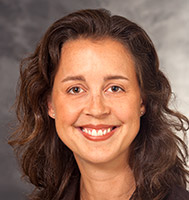 Moderator: Nikki St Clair, MD, MS – Professor, Division of Hospital Medicine & Complex Care, Division of Global Pediatrics, Department of Pediatrics, University of Wisconsin School of Medicine and Public Health Moderator: Nikki St Clair, MD, MS – Professor, Division of Hospital Medicine & Complex Care, Division of Global Pediatrics, Department of Pediatrics, University of Wisconsin School of Medicine and Public Health |
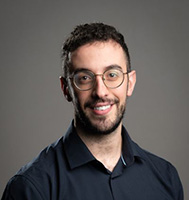 Panelist: Jack Koueik, MD – Fellow, Division of Allergy, Immunology, and Rheumatology, Department of Pediatrics, University of Wisconsin School of Medicine and Public Health Panelist: Jack Koueik, MD – Fellow, Division of Allergy, Immunology, and Rheumatology, Department of Pediatrics, University of Wisconsin School of Medicine and Public Health |
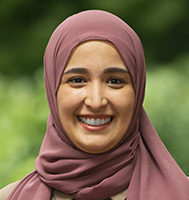 Panelist: Najla Ba Sharahil, MD – Fellow, Division of Pulmonology & Sleep Medicine, Department of Pediatrics, University of Wisconsin School of Medicine and Public Health Panelist: Najla Ba Sharahil, MD – Fellow, Division of Pulmonology & Sleep Medicine, Department of Pediatrics, University of Wisconsin School of Medicine and Public Health |
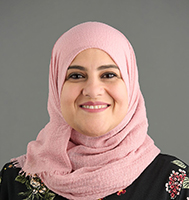 Panelist: Arij Beshish, MBBCh, PhD – Assistant Professor, Division of Pulmonology & Sleep Medicine, Department of Pediatrics, University of Wisconsin School of Medicine and Public Health Panelist: Arij Beshish, MBBCh, PhD – Assistant Professor, Division of Pulmonology & Sleep Medicine, Department of Pediatrics, University of Wisconsin School of Medicine and Public Health |
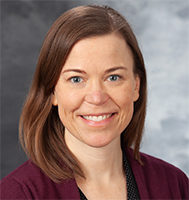 Panelist: Heidi Kloster, MD – Associate Professor, Associate Residency, Program Director, Division of Hospital Medicine & Complex Care, Department of Pediatrics, University of Wisconsin School of Medicine and Public Health Panelist: Heidi Kloster, MD – Associate Professor, Associate Residency, Program Director, Division of Hospital Medicine & Complex Care, Department of Pediatrics, University of Wisconsin School of Medicine and Public Health |
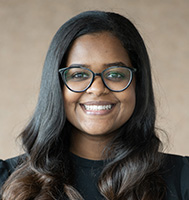 Panelist: Rawan Elhassan, MD – Resident, Department of Pediatrics, University of Wisconsin School of Medicine and Public Health Panelist: Rawan Elhassan, MD – Resident, Department of Pediatrics, University of Wisconsin School of Medicine and Public Health |
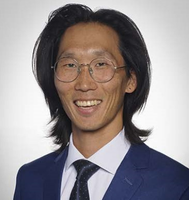 Panelist: Tim Lee, MD – Resident, Department of Pediatrics, University of Wisconsin School of Medicine and Public Health Panelist: Tim Lee, MD – Resident, Department of Pediatrics, University of Wisconsin School of Medicine and Public Health |
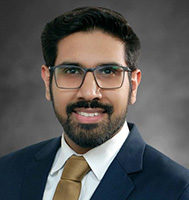 Panelist: Jalal-Ud-Din Khan, MBBS – Resident, Department of Pediatrics, University of Wisconsin School of Medicine and Public Health Panelist: Jalal-Ud-Din Khan, MBBS – Resident, Department of Pediatrics, University of Wisconsin School of Medicine and Public Health |
Session Recording:
Tuesday, February 10, 12-1:30 p.m. I Empowering Health Professions Students: Leveraging Generative AI for Critical Appraisal and Deep Learning - WORKSHOP
Empowering Health Professions Students: Leveraging Generative AI for Critical Appraisal and Deep Learning
This will be a highly interactive virtual workshop featuring two rounds of small group breakout discussions. To fully participate, presenters ask that attendees join using a Mac or PC with access to the desktop version of Microsoft Word (not the web-based version). In addition, please come prepared with an AI chatbot of your choice to use during the session. Examples include Google Gemini, Microsoft Copilot, ChatGPT, and others.
Session Overview: This interactive workshop explores how generative AI can be integrated into health professions education to enhance, rather than hinder, critical thinking and deep learning. Participants will examine both the opprtunities and risks of using AI tools in teaching and learning, with a focus on strategies that prevent passive engagement. Through guided discussion and collaborative activities, educators will develop practical approaches and resources to help their students critically appraise AI outputs and use them effectively in their learning. Attendees will leave with actionable insights and tools that can be immediately applied in their own educational contexts.
*This session will feature breakout rooms and will be very interactive!
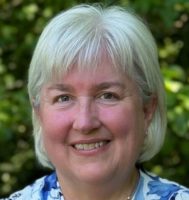 Speaker: Amy L. Wilson-Delfosse, PhD – Senior Associate Dean of Medical Education, Northeast Ohio Medical University, College of Medicine Speaker: Amy L. Wilson-Delfosse, PhD – Senior Associate Dean of Medical Education, Northeast Ohio Medical University, College of Medicine |
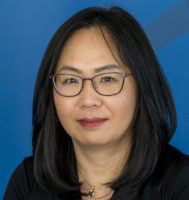 Speaker: Youngjin Cho, MS, PhD -Professor of Biochemistry and Molecular Biology, Department of Interdisciplinary Biomedical Sciences, AU/UGA Medical Partnership, UGA School of Medicine Speaker: Youngjin Cho, MS, PhD -Professor of Biochemistry and Molecular Biology, Department of Interdisciplinary Biomedical Sciences, AU/UGA Medical Partnership, UGA School of Medicine
|
This session was not recorded.
Wednesday, February 11, 8-9 a.m. I From Curiosity to Calling: Cultivating Interest in Pediatrics
From Curiosity to Calling: Cultivating Interest in Pediatrics
Session Overview: National trends have suggested that pediatric residency program have had declining applications and fill rates since 2017. This workforce change greatly impacts the care of one of our most vulnerable patient populations. While studies suggest that early exposure can influence specialty choice, it is also crucial to ascertain the reasons that provide either successful pathways or barriers to choosing a career in pediatrics. This session will begin with a didactic session discussing a status update on the current interventions at UWSMPH that are aimed to give students early exposure to pediatrics. We will then have an interactive panel discussion involving current students who will discuss their reasons for choosing (or not choosing) a career in pediatrics. We hope that this will give insight into how UWSMPH leadership can provide resources and eliminate barriers for our own students in choosing a career in pediatrics. We will conclude the session by discussing future directions and action items with a call for ideas on how we can increase the interest of our students in choosing a pediatric residency.
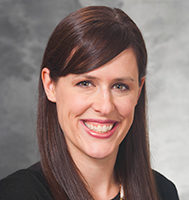
Moderator: Eileen Cowan, MD – Associate Professor, Associate Director for Pre-Clinical Pediatric Education, Division of Neonatology & Newborn Nursery Education, Department of Pediatrics, University of Wisconsin School of Public Health and Medicine |
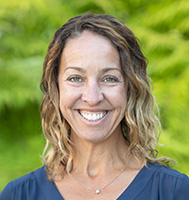
Moderator: Kari Bruckner – GME Program Administrator, Department of Pediatrics, University of Wisconsin School of Medicine and Public Health |
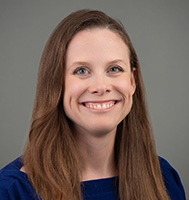 Moderator: Jess Babal, MD – Associate Professor, Education Lead, Division of General Pediatrics and Adolescent Medicine, Interim Division Co-Chair, Division of Child Protection, Department of Pediatrics, University of Wisconsin School of Medicine and Public Health Moderator: Jess Babal, MD – Associate Professor, Education Lead, Division of General Pediatrics and Adolescent Medicine, Interim Division Co-Chair, Division of Child Protection, Department of Pediatrics, University of Wisconsin School of Medicine and Public Health |
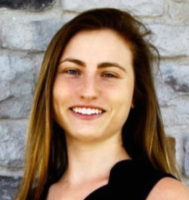 Panelist: Amy Frenkel – Medical Student, University of Wisconsin School of Medicine and Public Health Panelist: Amy Frenkel – Medical Student, University of Wisconsin School of Medicine and Public Health |
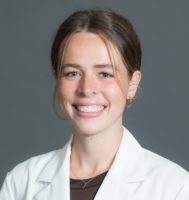 Panelist: Jenny Cape – Medical Student, University of Wisconsin School of Medicine and Public Health Panelist: Jenny Cape – Medical Student, University of Wisconsin School of Medicine and Public Health |

Panelist: Noah Pollard – Medical Student, University of Wisconsin School of Medicine and Public Health |
Session Recording:
Wednesday, February 11, 12-1 p.m. I Empowering Residents: Strategies to Support Autonomy and Growth
From Observation to Ownership: Fostering Resident Autonomy in Subspecialties
Session Description: This panel will explore practical strategies for fostering resident autonomy in clinical practice across specialties, at both fellow and faculty levels. Panelists will discuss how they create environments where learners can actively participate in care, balancing this autonomy with efficiency, safety, and patient-centered care. Participants will gain insight into both the successes and challenges of promoting autonomy within diverse clinical settings.
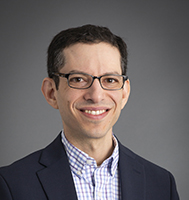 Moderator: Dan Sklansky, MD – associate professor, Residency Program Director, Division of Hospital Medicine & Complex Care, Department of Pediatrics, University of Wisconsin School of Medicine and Public Health Moderator: Dan Sklansky, MD – associate professor, Residency Program Director, Division of Hospital Medicine & Complex Care, Department of Pediatrics, University of Wisconsin School of Medicine and Public Health |
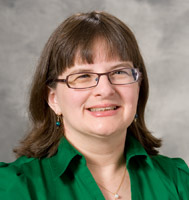 Panelist: Ellen L Connor, MD – Director Adolescent PCOS Clinic, professor, Division of Endocrinology & Diabetes, Department of Pediatrics, University of Wisconsin School of Medicine and Public Health Panelist: Ellen L Connor, MD – Director Adolescent PCOS Clinic, professor, Division of Endocrinology & Diabetes, Department of Pediatrics, University of Wisconsin School of Medicine and Public Health |
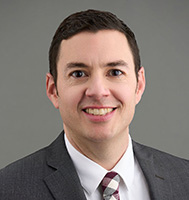
Panelist: Neil Paloian, MD – associate professor, Division of Nephrology, Department of Pediatrics, University of Wisconsin School of Medicine and Public Health |
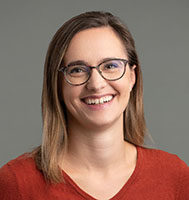 Panelist: Carolyn Sleeth, MD, MPH – assistant professor, Division of General Pediatrics & Adolescent Medicine, Department of Pediatrics, University of Wisconsin School of Medicine and Public Health Panelist: Carolyn Sleeth, MD, MPH – assistant professor, Division of General Pediatrics & Adolescent Medicine, Department of Pediatrics, University of Wisconsin School of Medicine and Public Health |
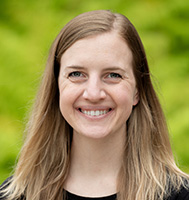 Panelist: Annie Uhing, MD – Fellow, Division of Endocrinology & Diabetes, Department of Pediatrics, University of Wisconsin School of Medicine and Public Health Panelist: Annie Uhing, MD – Fellow, Division of Endocrinology & Diabetes, Department of Pediatrics, University of Wisconsin School of Medicine and Public Health |
Session Recording:
Thursday, February 12, 7:30-8:30 a.m., IN PERSON I Pediatrics Grand Rounds
A Mirror for Learning: The Art and Science of Effective Feedback in Medical Education
Zoom Link, HSLC 1345
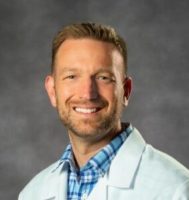 Speaker: Michael Ryan, MD, MEHP – Professor, Associate Dean for Assessment, Evaluation, Research, Innovation, Director of the Center for Excellence in Education, Professor, Division of General Pediatrics – Hospitalist, University of Virginia School of Medicine
Session Overview: Feedback is essential and challenging. In this Grand Rounds, the science and art of providing effective feedback in the clinical learning environment will be explored including: barriers, best practices, and practical implementation techniques.
Session Recording:
Thursday, February 12, 12-1 p.m., IN PERSON I If You’re Torn, Side With Me Because I Want It That Way
If You’re Torn, Side With Me Because I Want It That Way
Zoom Link, HSLC 1345
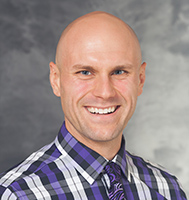 Moderator: Adam Bauer, MD – Associate Professor, Division of Neonatology & Newborn Nursery, Department of Pediatrics, University of Wisconsin School of Medicine and Public Health
Session Overview: Please join us in-person (though virtual free-per-view Zoom is available) for the medical education battle of the year, moderated by Adam Bauer. Three topics. Two opposing incredible pediatric faculty per topic. The audience decides who wins. *Of note, the faculty member may not necessarily agree with the side they’re arguing for!
Round 1: Hoyme v. Kloster: My Heart Will Go On to watch these two MedEd powerhouses crash over whether there should be more combined pediatric residency/fellowships, or if we should continue with the 3 year pediatric residency followed by 3 year pediatric subspecialty fellowships.
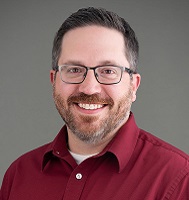
Derek Hoyme, MD – Associate Professor, Fellowship Director, Division of Cardiology, Department of Pediatrics, University of Wisconsin School of Medicine and Public Health |
Heidi Kloster, MD – Associate Professor, Associate Residency Program Director, Hospital Medicine & Complex Care, Department of Pediatrics, University of Wisconsin School of Medicine and Public Health |
Round 2: McBride v. Gehlbach: Isn’t it ironic that these two ICU MedEd champions will grapple over how well residents will be prepared to care for critically-ill children with the new ACGME requirements decreasing ICU time for pediatric residents? Don’t you think?
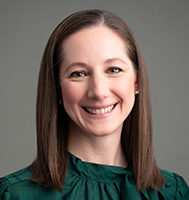 Elizabeth McBride, MD – Assistant Professor, Fellowship Director, Division of Neonatology & Newborn Nursery, Department of Pediatrics, University of Wisconsin School of Medicine and Public Health Elizabeth McBride, MD – Assistant Professor, Fellowship Director, Division of Neonatology & Newborn Nursery, Department of Pediatrics, University of Wisconsin School of Medicine and Public Health |
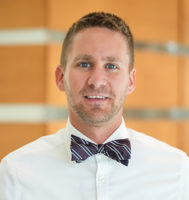 Jon Gehlbach, MD – Visiting Associate Professor, Associate Fellowship Director, Division of Critical Care, Department of Pediatrics, University of Wisconsin School of Medicine and Public Health Jon Gehlbach, MD – Visiting Associate Professor, Associate Fellowship Director, Division of Critical Care, Department of Pediatrics, University of Wisconsin School of Medicine and Public Health |
Round 3: Nackers v. Williams. Don’t speak now as there’s No Doubt these two faculty juggernauts will quarrel over how to improve trainee matriculation into pediatrics. Does it Smell Like Teen Spirit and we should focus on pre-clerkship and early UME exposure to pediatrics to gain applicants, or do we need to be Livin’ la Vida Loca with improved pediatric reimbursements and salaries to encourage the larger interest?
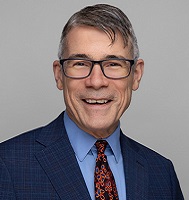 John Williams, MD – John E. Jr. and Louise A. Gonce Chair in Pediatrics, Professor, Division of Infectious Diseases, Department of Pediatrics, University of Wisconsin School of Medicine and Public Health John Williams, MD – John E. Jr. and Louise A. Gonce Chair in Pediatrics, Professor, Division of Infectious Diseases, Department of Pediatrics, University of Wisconsin School of Medicine and Public Health |
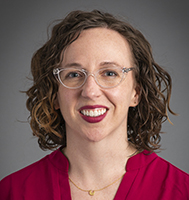 Kirstin Nackers, MD – Associate Professor, Director of Undergraduate Medical Education, Division of Hospital Medicine, University of Wisconsin School of Medicine and Public Health Kirstin Nackers, MD – Associate Professor, Director of Undergraduate Medical Education, Division of Hospital Medicine, University of Wisconsin School of Medicine and Public Health |
Session Recording:
Thursday, February 12, 1-3:30, IN PERSON I Becoming an Expert Chef: The Art and Science of Making Tastier Feedback Sandwiches
Becoming an Expert Chef: The Art and Science of Making Tastier Feedback Sandwiches
Zoom Link, HSLC 1345
Speaker: Michael Ryan, MD, MEHP – Professor, Associate Dean for Assessment, Evaluation, Research, Innovation, Director of the Center for Excellence in Education, Professor, Division of General Pediatrics – Hospitalist, University of Virginia School of Medicine
Session Overview: Feedback is critical to the growth of physicians-in-training. However, providing meaningful feedback is challenging and uncomfortable, both for trainees and for supervisors. In this workshop, participants will learn how to provide feedback in a straightforward and effective manner. Frameworks for typical and more challenging scenarios will be discussed in this highly interactive session.
Session Recording:
Accreditation Statement
 |
In support of improving patient care, the University of Wisconsin–Madison ICEP is jointly accredited by the Accreditation Council for Continuing Medical Education (ACCME), the Accreditation Council for Pharmacy Education (ACPE), and the American Nurses Credentialing Center (ANCC) to provide continuing education for the healthcare team. |
Credit Designation Statements |
|
| American Medical Association (AMA)
The University of Wisconsin–Madison ICEP designates this live and virtual activity for a maximum of 9.5 AMA PRA Category 1 Credits™. Physicians should claim only the credit commensurate with the extent of their participation in the activity. |
|
| American Nurses Credentialing Center (ANCC)
The University of Wisconsin–Madison ICEP designates this live and virtual activity for a maximum of 9.5 ANCC contact hours. |
|
| Continuing Education Units (CEUs)
The University of Wisconsin–Madison ICEP, as a member of the University Professional & Continuing Education Association (UPCEA), authorizes this program for 0.095 CEUs or 9.5 hours. |
|
Available Credit
- 9.50 University of Wisconsin–Madison Continuing Education Hours
- 9.50 Approved for AMA PRA Category 1 Credit™
Continuing Medical Education Credit
At the end of the week, attendees will be able to log into ICEP and claim credit. Questions can be directed to Kate Dougherty at catherine.dougherty@wisc.edu.
Conference Support
Need help? Looking for answers? Reach out to conference lead, Reva Finkelman at rfinkelman@wisc.edu.