
The Department of Pediatrics Division of Neonatology and Newborn Nursery hosted its first-ever Tiny Baby Conference at Unity Point Health – Meriter on March 12–13. Claudette Onyelobi, MD, assistant professor, served as conference director. As the division’s director of Small Baby Care, she leads fellow neonatologists, trainees, and staff in caring for babies born as early as 22 weeks’ gestation. Onyelobi is also developing a specialized “small baby” team at Unity Point Health – Meriter to help support families through the difficult decisions and challenges often related to care at the edge of viability.
UW physicians, advanced practice providers, nurses, nutritionists, pharmacists, and other health care professionals involved in neonatal care attended the conference’s lectures and workshops. Attendees also toured Unity Point Health – Meriter’s Level III neonatal intensive care unit (NICU) and Neonatal Education Simulation and Training Center (NEST).
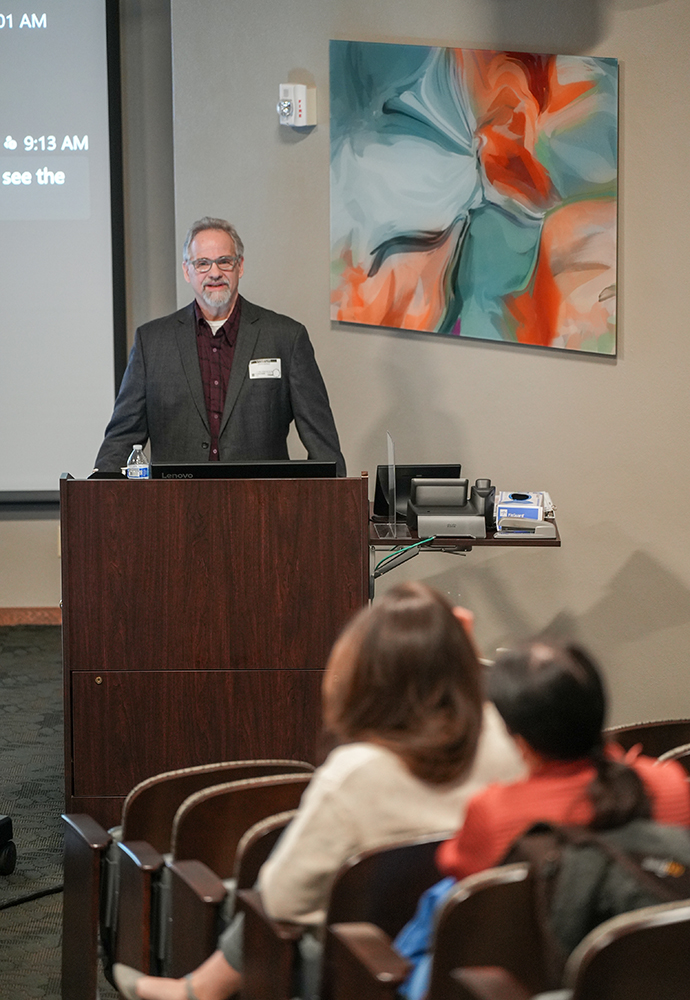
Guest speakers included two renown neonatology experts from the University of Iowa and Stead Family Children’s Hospital, a center with some of the highest survival rates worldwide for extremely preterm infants born as early as 21 weeks’ and 22 weeks’ gestation. Jonathan Klein, MD, professor emeritus, has been recognized as a world leader in the care of extremely premature infants. John Dagle, MD, PhD, professor, studies the genetics of prematurity and has a clinical interest in the optimization of nutrition in preterm infants. Together, Klein and Dagle built the small baby program at the University of Iowa.
For the Madison conference, Klein and Dagle studied de-identified patient cases from the UW and customized their presentations for local learners.
“The Tiny Baby Conference was incredible,” Onyelobi said. “Our team had the opportunity to ask thoughtful questions of leading experts in tiny baby care and learn new critical care concepts specific to our local population of tiny babies.”
The care of extremely preterm infants is cutting-edge medicine in the U.S. and globally. Collaboratives and initiatives around the world advocate for NICU providers and staff to come together and share ideas and resources to advance care. Onyelobi developed this year’s conference in that spirit.

“Inviting national leaders — and maybe one day international leaders — to this space encourages a best-practice-care approach in a field of medicine that is constantly evolving to address increasing survival rates and the growing demand to care for these critically ill infants,” she said. “It was important to me to provide learning opportunities for my fellow NICU team members that addressed the local care needs among our NICU population.”
Onyelobi is already planning future Tiny Baby Conferences in Wisconsin, with expanded goals and objectives. In 2027, she hopes to invite NICU teams and local experts from centers in the tri-state area.