The Gern Research Group is conducting several NIH-funded translational research studies to define the role of viral infections and other environmental factors in asthma initiation and disease activity and identify interactions between host, viral, and environmental factors (e.g., bacteria) that determine the severity of respiratory illnesses.
First, Dr. Gern is a Co-Principal Investigator along with Dr. Christine Seroogy for the University of Wisconsin Asthma and Allergic Diseases Clinical Research Center (AADCRC, funded by the NIH/NIAID). This is a collaborative program involving investigators in the Allergy/Immunology and Rheumatology Divisions (James Gern, Christine Seroogy, Yury Bochkov, Eishika Dissanayake) and Dr. Irene Ong (Departments of Obstetrics and Gynecology and Biostatistics and Medical Informatics) at the University of Wisconsin. Three interrelated projects determine how environmental exposures in farm and non-farm environments promote immune development and reduce the risk of viral respiratory illnesses, allergic diseases, and asthma in early childhood. These involve multiomics evaluation of airway and gut microbes, their metabolites, and effects on airway epithelial cells.
In addition, Dr. Gern is the Co-PI with Dr. Daniel Jackson (Department of Pediatrics) of the Childhood Asthma in Urban Settings (CAUSE) Administrative Center (funded by NIAID) and leads the Urban Environment and Childhood Asthma (URECA) birth cohort study within CAUSE. This study aims to identify lifestyle and environmental factors (including viral infections) unique to the urban environment that influence early immune development to increase the risks for allergic diseases and asthma.
Dr. Gern leads a collaborative data-sharing project called the Childhood Allergy and Asthma Data Repository (CADRE, funded by NIAID and the Office of the NIH Director). This project pools, harmonizes, and shares data from 13 US birth cohort studies. CADRE’s goal is to address questions about early life risk factors for asthma that are difficult to study within single cohorts due to limitations on sample size and single-center populations. Dr. Gern also leads one of 50 centers of the Environmental Influences on Child Health Outcomes (ECHO) program (funded by the NIH/NICHD). The ECHO study pools data from 50 US cohorts to address questions about risk factors for asthma, obesity, neurocognitive development, and perinatal outcomes.
Finally, the laboratory is participating in collaborative research projects to define mechanisms for viral respiratory infections to cause long-lived abnormalities of airway structure and function and to identify rhinovirus-induced inflammatory mechanisms involving airway epithelial cells.
Associated Training Programs
Allergy and Immunology Fellowship
Cellular and Molecular Pathology (CMP) Graduate Program
Medical Scientist Training Program (MSTP)
Research News

James (Jim) Gern named to Clarivate’s list of Highly Cited Researchers
Highly Cited Researchers demonstrate significant and broad influence in their field(s) of research and represent 1 in 1,000 scientists and social scientists worldwide. James (Jim) Gern, MD, professor, Division of Allergy, Immunology, and Rheumatology, and vice …
May 27, 2026
Department of Pediatrics members attend conferences near and far
Conference attendance is vital for clinicians, academic scholars, and scientists because it fosters professional growth, builds networks, and helps keep them at the forefront of medical knowledge and innovation. Members of the Department of Pediatrics …
December 10, 2025
The leap from a K to an R grant is a big advance in a researcher’s career: Physician-scientist Michelle Kelly exemplifies that evolution
Since last fall, Michelle Kelly, MD, PhD, professor in the Division of Hospital Medicine and Complex Care, and her research group have been continuing research on her ongoing project. The new five-year $1.99 million R01 …
April 9, 2025James Gern receives 2024 Bret Ratner Pediatric Allergy and Immunology Research Award
The American Academy of Pediatrics (AAP) Section on Allergy and Immunology presented James Gern, MD, professor and vice chair of research, Division of Allergy, Immunology, and Rheumatology, with its 2024 Bret Ratner Pediatric Allergy and Immunology …
October 24, 2024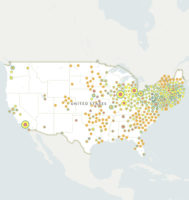
How old ‘redlining’ policies still affect childhood asthma risk
This article was originally published by Cincinnati Children’s and shared nationally through PR Newswire on September 24, 2024. Read the original article. An old government policy that determined who was eligible to receive government-supported home …
October 9, 2024- More News...
Professor
gern@medicine.wisc.edu