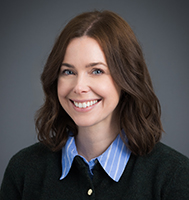
Kaylyn Lyons, MD
Position title: Assistant Professor
Address:
Division of Hematology, Oncology, Transplant, and Cellular Therapy
For Academic Inquiries: (608) 263-6691
Education
BS, University of Massachusetts Amherst, Amherst, Massachusetts
MD, Trinity College Dublin, The University of Dublin, Dublin, Ireland
Residency, Maine Medical Center, Tufts University, Portland, Maine
Fellowship, Pediatric Hematology/Oncology, Children’s Hospital Colorado, University of Colorado, Denver, Colorado
Fellowship, Pediatric Cancer Immunotherapy and Bone Marrow Transplant, Children’s Hospital of Philadelphia, University of Pennsylvania, Philadelphia, Pennsylvania
Professional Activities
Dr. Kaylyn Lyons is assistant professor (CHS) in the Division of Hematology, Oncology, Transplant, and Cellular Therapy. She serves as the lead for cytogenetic investigations for the Pediatric Real World CAR Consortium (PRWCC) and is a member of the Pediatric Transplantation and Cellular Therapy Consortium (PTCTC) oncology and cellular therapy strategy groups. Her professional activities center on collaborative efforts to advance cellular therapy and transplantation for children and young adults with hematologic malignancies.
Clinical Interests
Lyons cares for children and young adults with hematologic malignancies, with a particular interest in patients with relapsed or refractory disease. Her clinical focus includes the use of advanced cellular therapies, including CAR T cell therapy and hematopoietic stem cell transplantation, to treat high-risk leukemias and lymphomas.
Research Interests
Lyons’ research focuses on improving the use of cellular therapies and hematopoietic stem cell transplantation for children and young adults with high-risk and relapsed hematologic malignancies. She is particularly interested in conducting early-phase clinical trials of novel cellular therapies and developing thoughtful transplant approaches that reduce treatment-related toxicity while maintaining durable disease control.
A major focus of her research is understanding how leukemia biology influences response to cellular therapy. Her work investigates how cytogenetic and molecular features affect outcomes following CAR T cell therapy, including mechanisms of treatment resistance and relapse. Her broader goal is to identify which patients are most likely to benefit from CAR T cell therapy alone and which may benefit from hematopoietic stem cell transplantation or other consolidative approaches.