Pediatrics Research Week 2020 – Abstract Book
Pediatrics Research Week 2020 – Abstract Book
Pediatrics Research Week 2020 - Abstract Book
File: Pediatrics-Research-Week-2020-Abstract-Book-1.pdfPediatrics Research Week 2020 - Abstract Book
File: Pediatrics-Research-Week-2020-Abstract-Book-1.pdfPediatrics Research Week 2020 – Abstract Book

1. Ascierto PA, Fox B, Urba W, Anderson AC, Atkins MB, Borden EC, Brahmer J, Butterfield LH, Cesano A, Chen D, de Gruijl T, Dillman RO, Drake CG, Emens LA, Gajewski TF, Gulley JL, Stephen Hodi F, Hwu P, Kaufman D, Kaufman H, Lotze M, McNeel DG, Margolin K, Marincola F, Mastrangelo MJ, Maus MV, Parkinson DR, Romero PJ, Sondel PM, Spranger S, Sznol M, Weiner GJ, Wiggington JM, Weber JS. Insights from immuno-oncology: the Society for Immunotherapy of Cancer Statement on access to IL-6-targeting therapies for COVID-19. J Immunother Cancer. 2020 Apr;8(1). pii: e000878. doi: 10.1136/jitc-2020-000878. No abstract available. PMID: 32300051.
2. Barretto KT, Brockman-Schneider RA, Kuipers I, Basnet S, Bochkov YA, Altman MC, Jarjour NN, Gern JE, Esnault S. Human airway epithelial cells express a functional IL-5 receptor. Allergy. 2020 Apr 4. doi: 10.1111/all.14297. [Epub ahead of print] PubMed PMID: 32246831.
3. Bastos RW, Valero C, Silva LP, Schoen T, Drott M, Brauer V, Silva-Rocha R, Lind A, Steenwyk JL, Rokas A, Rodrigues F, Resendiz-Sharpe A, Lagrou K, Marcet-Houben M, Gabaldón T, McDonnell E, Reid I, Tsang A, Oakley BR, Loures FV, Almeida F, Huttenlocher A, Keller NP, Ries LNA, Goldman GH. Functional Characterization of Clinical Isolates of the Opportunistic Fungal Pathogen Aspergillus nidulans. mSphere. 2020 Apr8;5(2). pii: e00153-20. doi: 10.1128/mSphere.00153-20. PubMed PMID: 32269156; PubMed Central PMCID:PMC7142298.
4. Chan K, Hoon M, Pattnaik BR, Ver Hoeve JN, Wahlgren B, Gloe S, Williams J, Wetherbee B, Kiland JA, Vogel KR, Jansen E, Salomons G, Walters D, Roullet JB, Gibson KM, McLellan GJ. Vigabatrin-Induced Retinal Functional Alterations and Second-Order Neuron Plasticity in C57BL/6J Mice. Invest Ophthalmol Vis Sci. 2020 Feb 7;61(2):17. doi: 10.1167/iovs.61.2.17. PMID: 32053727.
5. Comstock JR, Buhalog B, Peebles JK, Hinshaw MA, Co DO, Arkin LM. Lipoatrophic panniculitis in an adolescent. Pediatr Dermatol. 2020 Mar 20. doi: 10.1111/pde.14127. [Epub ahead of print] PubMed PMID: 32198786.
6. Conway JA, Kharayat P, Sanders RC Jr, Nett S, Weiss SL, Edwards LR, Breuer R, Kirby A, Krawiec C, Page-Goertz C, Polikoff L, Turner DA, Shults J, Giuliano JS Jr, Orioles A, Balkandier S, Emeriaud G, Rehder KJ, Kian Boon JL, Shenoi A, Vanderford P, Nuthall G, Lee A, Zeqo J, Parsons SJ, Furlong-Dillard J, Meyer K, Harwayne-Gidansky I, Jung P, Adu-Darko M, Bysani GK, McCarthy MA, Shlomovich M, Toedt-Pingel I, Branca A, Esperanza MC, Al-Subu AM, Pinto M, Tallent S, Shetty R, Thyagarajan S, Ikeyama T, Tarquinio KM, Skippen P, Kasagi M, Howell JD, Nadkarni VM, Nishisaki A; Ketamine Use for Tracheal Intubation in Critically Ill Children Is Associated With a Lower Occurrence of Adverse Hemodyna [published online ahead of print, 2020 Apr 17]. Crit Care Med. 2020;10.1097/CCM.0000000000004314. doi:10.1097/CCM.0000000000004314.
7. Farrell PM, Rock MJ, Baker MW. The Impact of the CFTR Gene Discovery on Cystic Fibrosis Diagnosis, Counseling, and Preventive Therapy. Genes (Basel). 2020 Apr 8;11(4). doi: 10.3390/genes11040401. Review. PubMed PMID: 32276344.
8. Fujiogi M, Camargo CA Jr, Raita Y, Bochkov YA, Gern JE, Mansbach JM, Piedra PA, Hasegawa K. Association of rhinovirus species with nasopharyngeal metabolome in bronchiolitis infants: A multicenter study. Allergy. 2020 Apr 18. doi:10.1111/all.14326. [Epub ahead of print] PubMed PMID: 32306415.
9. Golenberg N, Squirrell JM, Bennin DA, Rindy J, Pistono PE, Eliceiri KW, Shelef MA, Kang J, Huttenlocher A. Citrullination regulates wound responses and tissue regeneration in zebrafish. J Cell Biol. 2020 Apr 6;219(4). pii:e201908164. doi: 10.1083/jcb.201908164. PubMed PMID: 32328635; PubMed Central PMCID: PMC7147109.
10. Harer MW, Charlton JR, Tipple TE, Reidy KJ. Preterm birth and neonatal acute kidney injury: implications on adolescent and adult outcomes. J Perinatol. 2020 Apr 10;. doi: 10.1038/s41372-020-0656-7. [Epub ahead of print] Review. PMID: 32277164.
11. Horoz ÖÖ, Aslan N, Yildizdaş D, Çoban Y, Sertdemir Y, Al-Subu A. Somatic regional oxygen saturation as an early marker of intra-abdominal hypertension in critically ill children: a pilot study [published online ahead of print, 2020 Feb 25].Turk J Med Sci. 2020;10.3906/sag-1903-201. doi:10.3906/sag-1903-201.
12. Jackson DJ, Busse WW, Bacharier LB, Kattan M, O’Connor GT, Wood RA, Visness CM, Durham SR, Larson D, Esnault S, Ober C, Gergen PJ, Becker P, Togias A, Gern JE, Altman MC. Association of Respiratory Allergy, Asthma and Expression of the SARS-CoV-2 Receptor, ACE2. J Allergy Clin Immunol. 2020 Apr 22. pii: S0091-6749(20)30551-0. doi: 10.1016/j.jaci.2020.04.009. [Epub ahead of print] PubMed PMID: 32333915; PubMed Central PMCID: PMC7175851.
13. Kellom ER, Wolf B, Rice GM, Stepien KE. Reversal of Vision Loss in a 49-Year-Old Man With Progressive Optic Atrophy Due to Profound Biotinidase Deficiency. J Neuroophthalmol.2020 Mar 31. doi: 10.1097/WNO.0000000000000933. [Epub ahead of print]PMID: 32235217DOI:10.1097/WNO.0000000000000933.
14. Kling PJ. Iron Nutrition, Erythrocytes, and Erythropoietin in the NICU: Erythropoietic and Neuroprotective Effects. Neoreviews. 2020 Feb;21(2):e80-e88. doi: 10.1542/neo.21-2-e80. PMID: 32005718.
15. Kohler J, Kelly MM. Addition of Dornase to Intrapleural Fibrinolytic Therapy Is Not Superior to Fibrinolytic Therapy Alone for Otherwise Healthy Children Hospitalized With Empyema. JAMA Pediatr.2020;174(4):323-324. doi:10.1001/jamapediatrics.2019.5910.
16. Kopriva JM, Miller KJ, Legare JM, Noonan KJ. Trevor’s disease of the distal radioulnar joint in achondroplasia. Am J Med Genet A. 2020 Feb29. Doi: 10.1002/ajmg.a.61529.
17. Kwan STC, Kezer CA, Helfrich KK, Saini N, Huebner SM, Flentke GR, Kling PJ, Smith SM. Maternal iron nutriture modulates placental development in a rat model of fetal alcohol spectrum disorder. Alcohol. 2020 May;84:57-66. doi: 10.1016/j.alcohol.2019.11.003. Epub 2019 Nov 14. PMID: 31734307; PMCID: PMC7131893.
18. Lai J, Schnapp BH, Tillman DS, Westergaard M, Hess J, Kraut AS. Use of graded responsibility and common entrustment considerations among United States emergency medicine residency programs. J Educ Eval Health Prof. 2020;17:11. doi: 10.3352/jeehp.2020.17.11. Epub 2020 Apr 20. PMID: 32306707.
19. McAdams RM, Pak D, Lalovic B, Phillips B, Shen DD. Dexmedetomidine Pharmacokinetics in Neonates with Hypoxic-Ischemic Encephalopathy Receiving Hypothermia. Anesthesiol Res Pract. 2020;2020:2582965. doi: 10.1155/2020/2582965. eCollection 2020. PMID: 32158472; PMCID: PMC7060842.
20. Meinen RD, Bauer AS, Devous K, Cowan E. Point-of-care ultrasound use in umbilical line placement: a review. J Perinatol. 2020 Apr;40(4):560-566. doi: 10.1038/s41372-019-0558-8. Epub 2019 Nov 22. Review. PMID: 31758061.
21. Mezu-Ndubuisi OJ, Macke EL, Kalavacherla R, Nwaba AA, Suscha A, Zaitoun IS, Ikeda A, Sheibani N. Long-term evaluation of retinal morphology and function in a mouse model of oxygen-induced retinopathy. Mol Vis. 2020;26:257-276. eCollection 2020. PMID: 32256029; PMCID: PMC7127927.
22. Pampati S, Lowry R, Moreno MA, Rasberry CN, Steiner RJ. Having a Sexual Photo Shared Without Permission and Associated Health Risks: A Snapshot of Nonconsensual Sexting. JAMA Pediatr. 2020 Mar 23;. doi: 10.1001/jamapediatrics.2020.0028. [Epub ahead of print] PubMed PMID: 32202601; PubMed Central PMCID: PMC7091371.
23. Pet GC, Eickhoff JC, McNevin KE, Do J, McAdams RM. Risk factors for peripherally inserted central catheter complications in neonates. J Perinatol. 2020 Apr;40(4):581-588. doi: 10.1038/s41372-019-0575-7. Epub 2020 Jan 7. PMID: 31911643.
24. Sandri BJ, Lubach GR, Lock EF, Georgieff MK, Kling PJ, Coe CL, Rao RB. Early-Life Iron Deficiency and Its Natural Resolution Are Associated with Altered Serum Metabolomic Profiles in Infant Rhesus Monkeys. J Nutr. 2020 Apr 1;150(4):685-693. doi: 10.1093/jn/nxz274. PMID: 31722400; PMCID: PMC7138653.
25. Schauberger E, Biagini Myers JM, He H, Martin LJ, Arshad SH, Kurukulaaratchy R, Khurana Hershey GK. Use of the Pediatric Asthma Risk Score to predict allergic and nonallergicasthma. Ann Allergy Asthma Immunol. 2020 Mar 20. pii: S1081-1206(20)30154-X. doi: 10.1016/j.anai.2020.03.010. [Epub ahead of print]PubMed PMID: 32201305
26. Schmuhl NB, Mooney KE, Zhang X, Cooney LG, Conway JH, LoConte NK. No association between HPV vaccination and infertility in U.S. females 18-33 years old. [published online ahead of print, 2020 Apr 3].Vaccine. 2020;S0264-410X(20)30414-X. doi:10.1016/j.vaccine.2020.03.035.
27. Verboon JM, Mahmut D, Kim AR, Nakamura M, Abdulhay NJ, Nandakumar SK, Gupta N, Akie TE, Geddis AE, Manes B, Kapp ME, Hofmann I, Gabriel SB, Klein DE, Williams DA, Frangoul HA, Parkhurst SM, Crane GM, Cantor AB, Sankaran VG. Infantile Myelofibrosis and Myeloproliferation with CDC42 Dysfunction. J Clin Immunol. 2020 Apr 17. doi: 10.1007/s10875-020-00778-7. [Epub ahead of print]. PMID: 32303876.
28. Von Bergen NH, Anagnostopoulos PV. Commentary: What is invisible to the eye could be seen through the heart: How advancements to the visualization of the conduction tissue can improve surgical and electrophysiology procedures. J Thorac Cardiovasc Surg. 2020 Mar 9;. doi: 10.1016/j.jtcvs.2020.02.091. [Epub ahead of print] PMID: 32279964.
29. Wiesner DL, Merkhofer RM, Ober C, Kujoth GC, Niu M, Keller NP, Gern JE, Brockman-Schneider RA, Evans MD, Jackson DJ, Warner T, Jarjour NN, Esnault SJ, Feldman MB, Freeman M, Mou H, Vyas JM, Klein BS. Club Cell TRPV4 Serves as a Damage Sensor Driving Lung Allergic Inflammation. Cell Host Microbe. 2020 Apr 8;27(4):614-628.e6. doi: 10.1016/j.chom.2020.02.006. Epub 2020 Mar 3. PubMed PMID: 32130954.
30. Wooldridge AR, Carayon P, Hoonakker P, Hose B, Eithun B, Brazelton T 3rd, Ross J, Kohler JE, Kelly MM, Dean SM, Rusy D, Gurses AP. Work system barriers and facilitators in inpatient care transitions of pediatric trauma patients. Appl Ergon.2020 May;85:103059. doi: 10.1016/j.apergo.2020.103059. Epub 2020 Feb 12.


In response to COVID-19, the Department of Pediatrics’ annual Research Week will offer alternative programming to spotlight the scholarly work from its residents, fellows, faculty and staff. Through a mix of livestreamed lectures and interactive sessions, Research Week’s celebration of scholarship will be virtually available to the University of Wisconsin School of Medicine and Public Health community and anyone interested in the latest advances in pediatric research.
Activities for the week include small group sessions with faculty and trainees to discuss research careers and how to turn an idea into a research project, the distinguished Gerard B. Odell Lecture, a Faculty Research Forum, platform presentations, and an online poster session featuring the research of residents, fellows, faculty and staff. New this year, up to 10 hours of continuing medical education (CME) credit can be earned by attending the lectures.
A brief outline of the week’s activities is below.
| Tuesday, May 26, 2020 Opening Lecture: What Everyone Needs to Know About Quality Improvement, Informatics and Turning an Idea into a Project 8:00-9:00am | Livestreamed via Blackboard Collaborate 1 CME Credit Available* Presenters: James Gern, MD, Jennifer Rehm, MD, Michael Semanik, MD and Kristin Shadman, MD |
| Wednesday, May 27, 2020 Morning Conference Lecture: Research as a Career Choice 8:00-9:00am | Livestreamed via Blackboard Collaborate 1 CME Credit Available* Presenter: Anne Marie Singh, MD |
| Thursday, May 28, 2020 Gerard B. Odell Lecture and Grand Rounds Presentation 7:30-8:30am | Livestreamed via Blackboard Collaborate 1 CME Credit Available* Presenter: Katryn Furuya, MD The Odell Lecture is named for Gerard B. Odell, MD, who directed the Department of Pediatrics’ Division of Gastroenterology and Nutrition from 1976 through 1991. Dr. Odell was internationally recognized for his research in the field of neonatal jaundice and bilirubin metabolism, and was highly influential in improving the quality of care for newborns and children with liver disease. The Gerard B. Odell Research Award is given to an assistant or associate professor of pediatrics in recognition of outstanding research accomplishments and demonstrated potential for future contributions. Dr. Pelin Cengiz (Associate Professor (CHS), Division of Critical Care) will be presented with this year’s Gerard B. Odell Research Award. Department of Pediatrics Faculty Research Forum – New! 8:55am-12:00pm | Livestreamed via Blackboard Collaborate Up to 3 CME Credits Available* This session will feature ten research vignettes from Department of Pediatrics faculty who were asked to describe one of their favorite projects. Each presentation will last ten minutes and include an additional five minutes for questions and open discussion. The session will be a great opportunity to learn about exciting new developments in child health research. More details on each presentation will be available on our website. Academic Research Town Hall 12:00-12:30pm | Livestreamed via Blackboard Collaborate Drs. Bikash Pattnaik and James Gern will lead a discussion on mechanisms to promote collaborative research. |
| Friday, May 29, 2020 Research Week Keynote Lecture: “How I Became Interested in Pediatrics Research” and Platform Presentations 1:00-3:00pm | Livestreamed via Blackboard Collaborate Up to 2 CME Credits Available* The Research Week Keynote Lecture will be presented by Pelin Cengiz, MD. The lecture will be followed by presentations from two residents, two fellows, and two faculty members. The platform presentations were selected by the Research Week Planning Committee. Online Poster Session and Presentations 3:00-5:00pm | Livestreamed via Blackboard Collaborate Up to 1.5 CME Credits Available* Research posters will be presented online by residents, fellows, faculty and staff. Starting at 3:30pm, brief presentations by each researcher will be delivered via Blackboard Collaborate. |

The following scholarly articles were published by Department of Pediatrics faculty and staff during February 2020:
The Midwest Society for Pediatric Research (MSPR) held its annual meeting at Lurie Children’s Hospital last week and the UW-Madison Department of Pediatrics was well represented. Members from all levels of the UW-Madison Department of Pediatrics attended and presented at the meeting including the following abstract presentations:
•Adam Bauer, Pamela Kling, Vera Tskenova, Ethan Rosen, Elizabeth Petty. The Impact of a Research Concentration Program on Medical Student Research in Pediatrics.
•Dinushan Kaluarachchi, Victoria Brocksmith, David Allen, Jens Eickhoff, Sandra Dawe, Mei Baker. Thyroid Stimulating Hormone Reference Ranges for Moderate to Late Preterm Infants.
•Nur Aycan, Nazli Deveci, Pinar Kemanli, Burak Ozaydin, Margaret B. Hackett, Dila Zafer, Nur Sena Cagatay, Ela Bicki, Onur Taparli, Karyn Frick, Jon Levine, Pelin Cengiz. ER alpha dependent TrkB receptor mediated signaling recovers anxiety, cognition and memory in female mice only following perinatal HIE.
•Nazli Deveci, Dila Zafer, Pinar Kemanli, Margaret Hackett, Nur Aycan, Burak Ozaydin, Basak Mert, Alexandra Anagnostopoulos, Robinson Goy, Amita Kapoor, Peter Ferrazzano, Jon Levine, Pelin Cengiz. Hypoxic ischemic encephalopathy increases estradiol and testosterone contents only in the female hippocampi.
•William Genthe, Giangela Stokes, Maria Brix, Julia Wynn, Yufeng Shen, Wendy Chung, David McCulley. Congenital Diaphragmatic Hernia-Associated Gene SIN3A is Required for Diaphragm Formation and Lung Development.
•Luke Richard, Matthew Harer. The effect of caffeine on renal tissue oxygenation in preterm neonates.
•Megan Roedel, Katie Hensel, Jens Eickhoff, Lisa Cadmus-Bertram, Aaron Carrel, Kristen Marten, Nicole St Clair. Participation in School-Age Triathlons Improves Parental Perceptions of Children’s Self-Confidence: Results from a Tri 4 Schools Study.
•Ethan Rosen, Daniel Adu, Laura Ziebarth, Sally Norlin, Pamela Kling. Predictors of Outcomes for Small for Gestational Age Neonates in the NICU.
•Giangela Stokes, Ashley Doherty, William Genthe, Maria Brix, David McCulley. PBX1 is required for diaphragm formation and postnatal alveologenesis.
•Stephanie Syu, Windy Smith, Kirsten Koffarnus, Whitney Horsley, Holly Walker, Daniel Sklansky, Kristen Shadman, Michelle Kelly. Quality Improvement Initiative: Infant CPR Education for Caregivers of Patients Admitted for BRUE.
•Natalie Tedford, Sudarshawn Damodharan, Nicholas Kuehnel. Implementation and Evaluation of a Pediatric Observation Unit Using Condition Specific Guidelines.
•Brandon Tomlin, Ryan McAdams, Dinushan Kaluarachchi. Comparison of African American and White Infant Mortality Rates in Wisconsin Using Direct Adjustment Method.
•Samantha Williams Al-Kharusy, Nirali Bora, Mario Cesario. ACE Screening and Psychosocial Resources in Children.
•Ben Zellmer, Ryan Coller, Shannon Dean, Daniel Sklansky, Windy Smith, Catherine Arnott Smith, Peter Hoonakker, Carley Sprackling, Brad Ehlenfeldt, Michelle Kelly. Sharing Physicians’ Notes with Parents of Hospitalized Children: Preliminary results.
Congratulations to all the presenters and abstract authors for their outstanding contributions to improve the health of children in Wisconsin and in the Midwest Region! Special mention to award winners Brandon Tomlin, MD (PL3 Resident), recipient of the Stanley Phillips Best Poster Award – given in honor of the University of Wisconsin’s Neonatology Fellow Stanley Phillips, MD, and William Genthe (McCulley Research Group), recipient of the MSPR Student Presentation Award.
The Midwest SPR will hold its 2020 annual meeting at Lurie with abstract submission and meeting dates that will be announced shortly. Hope to see everyone again next year! If you are new to the MSPR, check out their webpage. The mission of the Midwest SPR is to further pediatric research in the Midwest by highlighting scientific discovery, fostering collaborations, and promoting academic career development from trainees to senior faculty. Through our strong mentorship networks and our annual meeting, we provide our members a unique way to develop significant, interactive, and supportive scientific and academic connections with other researchers across the Midwest region. The meeting is a fantastic venue for trainees and junior faculty to present their work and establish a regional reputation. It is also a great way to develop collaborations with investigators at nearby institutions.
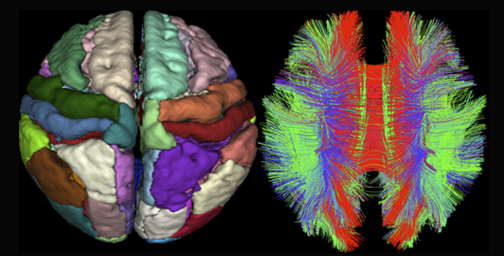
Severe traumatic brain injury (TBI) is the leading cause of death and long-term disability in children, affecting over 30,000 children each year.
Although clinicians use advanced neuroimaging tools such as magnetic resonance imaging (MRI) to diagnose TBI, little is known about how those imaging findings can be used to anticipate functional outcomes.
But thanks to a new four-year, $2M grant from the National Institutes of Health–National Institute of Neurological Disorders and Stroke, a research team led by Peter Ferrazzano, MD, will use MRI to identify brain network injuries that may predict specific neurocognitive deficits after TBI—information that may help clinicians determine appropriate therapy.
Dr. Ferrazzano’s research uses a new framework for understanding functional impairments after TBI, in which injury to the long-distance fiber tracts that connect brain network nodes—or direct injury to the nodes themselves—disrupts brain network function, resulting in cognitive or psychological impairments to the domain served by that network.
Using that framework, investigators will focus specifically on three well-defined brain networks:
Dr. Ferrazzano’s team is partnering with an existing multicenter pediatric TBI clinical trial (the Approaches and Decisions in Acute Pediatric TBI, or ADAPT, trial) for recruitment, data collection and analysis.
They will collect acute MRI scans from approximately 400 children with severe TBI who are enrolled in the ADAPT Trial. One year after injury, they will perform follow-up imaging, including advanced MRI techniques such as Diffusion Tensor Imaging and resting-state functional MRI, on 100 patients at 15 sites around the U.S. They will then correlate imaging findings with the extensive acute clinical data and comprehensive neuropsychological testing collected for the ADAPT trial.
The project is the largest MRI study of severe pediatric TBI to date. Dr. Ferrazzano hopes that it will provide valuable information for improved clinical decision making.
“Given the prevalence of brain injury in pediatric populations and its potential for devastating, lifelong deficits, improving outcomes in these children is an important public health goal,” Ferrazzano noted. “Being able to anticipate the needs of children suffering the aftereffects of brain injury will allow health care professionals to provide timely interventions and rehabilitation,” he added.
Dr. Ferrazzano’s collaborators include co-PI Andy Alexander, PhD (MR Physics, Waisman Lab for Brain Imaging and Behavior); Aaron Field, MD, PhD (Neuroradiology); Rasmus Birn, PhD (Psychiatry); Jeanette Mumford, PhD (Waisman Center); Paul Rathouz, PhD (Biostatistics and Medical Informatics); and Kate Bowen, PhD (Pediatric Neuropsychology).


Peter Ferrazzano, MD, was recently awarded an R01 grant from the National Institutes of Health/National Institute of Neurological Disorders and Stroke (NIH-NINDS) for his proposal entitled, “MRI Markers of Functional Outcome after Severe Pediatric TBI”. This four-year award, worth over $2.16 million, is in conjunction with co-PI Andrew Alexander, PhD, and uses MRI to map brain network connectivity and to identify brain network injuries that could predict neurocognitive deficits after traumatic brain injury (TBI).
Congratulations to the following students and their mentors who have been awarded 2015-2016 Wisconsin Hilldale Undergraduate/Faculty Research Fellowships. Award recipients receive $3,000 and faculty mentors $500 to sponsor a research project that will be presented at the Undergraduate Symposium in April 2016. Additionally, award recipients were recognized at the Chancellor’s Undergraduate Awards Ceremony in early May.
Congratulations to Peter Ferrazzano, MD, on receiving a National Institutes of Health – National Institute of Neurological Disorders and Stroke (NIH-NINDS) Mentored Clinical Scientist Research Career Development Award (K08) for his project entitled, “Age-dependent microglial responses in hypoxia-ischemia.” This project will investigate age- and region- dependent differences in the microglia-mediated neuroinflammatory response to cerebral ischemia. The completion of this study will shed new light on microglia function after hypoxia-ischemia in the developing brain, and determine the potential therapeutic benefit of microglial inhibition after cerebral ischemia. The 5-year award provides funding for 75% of Dr. Ferrazzano’s protected research time and $50,000/year to support his lab expenses; a total of over $960,000 over the entire award.