Q&A with Shelley Choudhury, MD, assistant professor, Division of Gastroenterology, Hepatology, and Nutrition
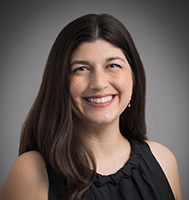 Hometown: Oak Ridge, Tennessee
Educational/professional background: I earned a BS in neuroscience at Rhodes College in Memphis, then my medical degree at the University of Tennessee Health Sciences Center, College of Medicine in Memphis. I completed residency in categorical pediatrics at Washington University in St. Louis, Missouri. I followed that with a fellowship in pediatric gastroenterology and later completed a fellowship in pediatric transplant hepatology, both at Washington University. I had amazing mentors every step of the way.
What is your field of research or area of clinical care, and how did you get into it? Pediatric transplant hepatology is a team-based discipline involving many care team members with differing expertise and perspectives; I love learning from my colleagues. There is a broad spectrum of disease processes, varying ages of patients from babies to teenagers, and a lot of continuity with patients over the years. This all keeps both my brain and heart happy. A pediatric gastroenterologist did an introductory session for me in my first year in medical school. She made it sound like fun and not just work — I wanted to be a part of something like that.
How would you describe your work to a 5-year-old? I help kids to take care of a piece of their body that helps them grow and keeps them healthy so they can do the things they love.
What attracted you to UW–Madison? It is within driving distance of some of our family, and it has a relaxed, less stressful vibe while still holding a lot of potential for fun.
What is your favorite thing to do in Madison? I just moved here, but so far, I’ve just been exploring restaurants (and cheese!) and taking in the scenery!
What’s one thing you hope trainees will learn from you and your work? All that stuff you learned in medical school really is important! There is a kid out there who needs you to think critically about why they are sick. All that work you did will be worth it when you can help them because you used your brain and didn’t just regurgitate a textbook.
Do you feel your work relates to the Wisconsin Idea? If so, please describe how. Absolutely! So much of liver and GI health revolves around environmental health. We learn every day when we go to the grocery store, take fitness classes with our friends, and listen to the unfiltered commentary from children — all of these can inform the way we think about our bodies and health in a continual fashion.
What’s something interesting about your area of expertise you can share that will make us sound smarter during video chats and parties? Turmeric is a spice that is widely touted as an anti-inflammatory agent and supplement for liver health, but people have died from taking too much. The toxicity of most things is all about dose!
What are some of your hobbies and other interests? I love old things — antiquing and vintage shopping are fun for me, and there is always the thrill of a great deal. I love spending time with my kids, husband, and dog — even just doing the little things together like a quick zoo trip, walking the dog, or making pancakes on a Saturday morning.