Q&A with Kaylyn Lyons, MD, assistant professor, Division of Hematology, Oncology, Transplant, and Cellular Therapy
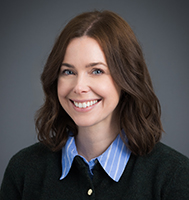 Hometown: Belchertown, Massachusetts
Educational/professional background: After completing a BS at the University of Massachusetts–Amherst, I earned my medical degree from Trinity College Dublin, University of Dublin, Ireland. My residency was in Maine Medical Center, Tufts University, in Portland, Maine. I went on to a fellowship in pediatric hematology/oncology at Children’s Hospital Colorado, University of Colorado in Denver. I then completed a second fellowship in pediatric cancer immunotherapy and bone marrow transplant at Children’s Hospital of Philadelphia, University of Pennsylvania.
Previous position (title, institution): Fellow in Pediatric Cancer Immunotherapy and Bone Marrow Transplant, Children’s Hospital of Philadelphia, University of Pennsylvania
What is your field of research or area of clinical care, and how did you get into it? Clinically, I’m interested in caring for patients with hematologic malignancies, particularly those with relapsed or refractory disease who may benefit from CAR T-cell therapy or transplant. My research interests are broadly focused on improving how we use these therapies — developing novel cellular therapies through early-phase trials, optimizing transplant approaches to reduce toxicity and relapse, and understanding how disease biology and cytogenetics can help us better select patients for CAR T versus transplant and guide treatment sequencing. My clinical and research interests developed simultaneously when I was on the BMT service in fellowship, and I observed strikingly different courses for my patients with the same diseases. I wanted to understand the influence of disease biology on a deep level and improve care for these patients.
How would you describe your work to a 5-year-old? I’m a doctor who takes care of kids with cancer. I also study new ways to help their bodies fight the cancer when regular medicines don’t work.
What attracted you to UW–Madison? The people and the opportunities. The people were so warm and inviting, and I especially appreciated the way they spoke about one another.
What’s one thing you hope trainees will learn from you and your work? You get to define exactly what a meaningful career looks like, and people will help you achieve that.
Do you feel your work relates to the Wisconsin Idea? If so, please describe how. My work reflects the Wisconsin Idea through collaboration — bringing together clinicians and researchers across institutions to answer important questions and improve care for children with cancer.
What’s something interesting about your area of expertise you can share that will make us sound smarter during video chats and parties? Some cancer treatments are actually alive. CAR T-cell therapy uses a patient’s own immune cells, which are genetically reprogrammed to recognize and attack their cancer, and are then given back to the patient. Unlike a traditional drug, these cells can multiply and persist in the body long after treatment.
What is your favorite thing to do in Madison? Being outdoors with my family in any and all forms.
What are some of your hobbies and other interests? I love live music, being outdoors, and traveling.