Visual Stories of Maternal and Child Health Exhibit
Experience how art can spark conversation and deepen reflection within the MCH community. This exhibit features visual art that explores themes of family, healing, identity, and community connection.
-
Exhibit Display: Throughout the conference (April 13 & 14)
-
Featured Networking Event: Monday, April 13 | 5:15 p.m. – 6:15 p.m.
Featured Artwork
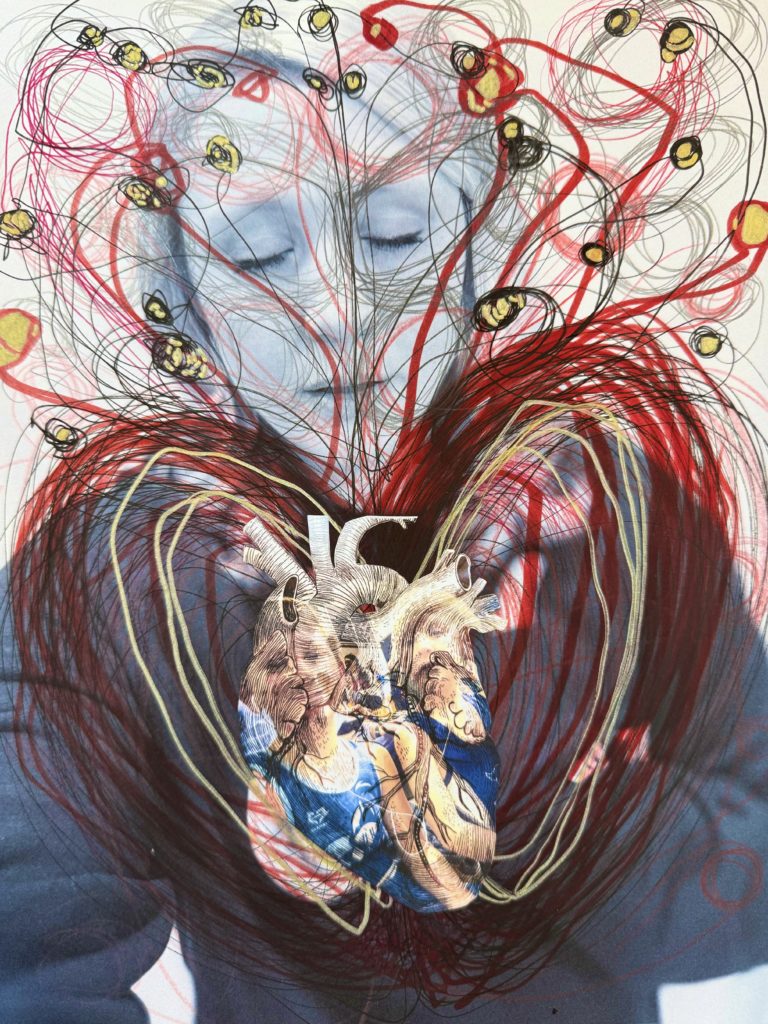
Title: Pendulation
Artist: Megan Wahl, PhD
Media: Mixed media (photography and bilateral ink drawing)
Description: Following my diagnosis of postpartum obsessive-compulsive disorder, I engaged in guided drawing as a Sensorimotor Art Therapy modality to explore and regulate embodied trauma responses. Guided drawing is a bilateral, rhythmic process that engages both hemispheres of the brain through simultaneous, mirrored movement of the hands. This form of bilateral stimulation supports nervous system integration by promoting interhemispheric communication, increasing vagal tone, and facilitating access to implicit somatic memory.
Working slowly with both hands, I tracked internal sensations—tightness in the chest, constriction in the throat, heat in the limbs—allowing these embodied experiences to guide the movement of the lines. Rather than directing the drawing cognitively, I followed sensation, creating an externalized map of my nervous system in real time. This process supported bilateral regulation and co-regulation within the self, helping shift autonomic states from hyperarousal toward increased parasympathetic engagement.
Grounded in principles of somatic experiencing and polyvagal theory, guided drawing allowed traumatic material held in the body to emerge safely through rhythmic, patterned movement. The repetitive crossing of the midline created a container for discharge and integration, transforming anxiety, fear, and shame into organized somatic awareness. Through this process, fragmented body memories became visually coherent, fostering agency, presence, and emotional regulation.
After completing the drawing, I digitally overlaid it onto a photograph taken during the original embodied experience. This layering bridges internal sensation with external context, offering visual testimony to how trauma lives simultaneously in the nervous system and in lived environments. The heart imagery reflects both physiological activation and emotional vulnerability, while the gestural lines trace pathways of activation, connection, and repair.
The resulting artwork serves as physical evidence of healing—documenting a movement from immobilization toward agency. It reflects the body’s innate capacity for self-regulation when supported through creative, somatic practices. This piece stands as both a personal record of recovery and a broader invitation to consider how expressive, body-based interventions can support maternal mental health by restoring safety, coherence, and connection.