Mission
As the Social Media and Adolescent Health Research Team, or SMAHRT, we strive to advance society’s understanding of the relationship between media and adolescent health. Our goals include embracing innovation, advancing knowledge and supporting trainees towards improving the health and well-being of teens. We prioritize incorporation of diverse voices and perspectives in every aspect of our work.
Focus
SMAHRT’s core areas of work include: 1) providing education to adolescents and families towards safe digital media use, 2) developing tools to assess digital media use and understand beneficial and problematic internet use, and 3) both testing and interpreting messages within social media to promote healthy behaviors.
Values
- An interdisciplinary approach with emphasis on using rigorous and ethical research practices
- Collaboration with critical stakeholders including researchers, clinicians, educators, technology professionals, youth and community members in the development and translation of our research projects
- Diversity among our trainees, team members, colleagues and participants including racial, cultural, religious, sex, gender, sexual orientation and ability status
The majority of SMAHRT’s work focuses on three research cores:
Technology use and misuse
- The purpose of the technology use and misuse research core is to explore how technology use interacts with health outcomes relevant to adolescents and young adults, and to develop innovative methods for assessing technology use which can be used in research and clinical settings.
- Projects within this SMAHRT research core focus on the measurement of technology use in general and measurements and analyses of Problematic Internet Use (PIU) in particular.
Online safety
- The purpose of these projects is to investigate key issues in online safety, and to provide adolescents and their families with sound and relevant education on safe internet use in a meaningful and appealing manner. Towards this goal, we apply a transdisciplinary approach, which combines elements of public health, education, and consumer science.
- Projects within this SMAHRT research core include education and prevention approaches to internet safety and research on cyberbullying.
Social media
- Projects within this SMAHRT research core share the common goal of understanding displayed health behaviors on social media sites, and considering new ways to provide prevention and intervention programs using social media.
Research News
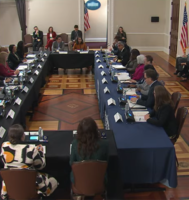
Megan Moreno invited to participate in White House roundtable discussion addressing child online safety
Responding to a January 24 invitation, Megan Moreno, MD, MSEd, MPH, professor and interim chair, Department of Pediatrics, traveled to Washington, D.C., to participate as one of the advocates and experts in a Kids Online …
February 6, 2024
Pediatrics faculty share expertise: April 2023
University of Wisconsin Department of Pediatrics faculty are at the forefront of media coverage as local, state, and national journalists seek out experts on the topics of child health, parenting, vaccinations, and COVID-19, to name …
May 1, 2023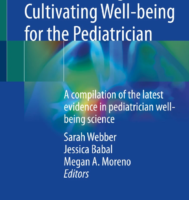
Three department members offer new evidence of well-being science for pediatricians in a new book
Three Department of Pediatrics members, Sarah Webber, MD, director of well-being, associate professor, Division of Hospital Medicine; Jessica Babal, MD, assistant professor and interim chief, Division of General Pediatrics and Adolescent Medicine; and Megan A. …
January 24, 2023
Department of Pediatrics welcomes Megan A. Moreno as its new interim chair
The Department of Pediatrics at the University of Wisconsin School of Medicine and Public Health welcomed in the new year with a new interim chair. Megan A. Moreno, MD, MSEd, MPH, vice chair of academic …
January 9, 2023
Megan Moreno receives grant from AAP
In partnership with the American Academy of Pediatrics (AAP), Megan Moreno, MD, MSEd, MPH, vice chair of academic affairs and professor and chief, Division of General Pediatrics and Adolescent Medicine, has been invited to participate in …
November 15, 2022- More News...

Professor and Interim Chair